Manufacturing systems are optimised for functionality. In an ideal situation, production lines run at full capacity around the clock, all year round. However, the geopolitical situation has changed the operating environment. The new ideal is security that ensures uninterrupted operations.
It is an ordinary day. Lights of the production line are flashing, sensors are reporting steady readings, and customer deliveries are progressing on schedule. Then, suddenly –systems go dark. The controls stop responding and the line comes to a halt. Alarms begin to sound. It becomes evident that this is not a run-of-the-mill power outage or simple equipment failure, but a malicious cyberattack.
In that moment, the entire company – production capacity, supply chains, reputation – hangs on a single question: how can the company present itself as trustworthy to key stakeholders in a situation where no one yet knows what has really happened?
Three types of cyber crises – and why the manufacturing industry is a particularly high-risk zone
The impact of cyber crises on a company’s operations varies. In simplified terms, their severity can be divided according to how they affect the company’s ability to operate.
- SaaS and technology sector crises: when service disruption stops the business
In online business, a cyber crisis is existential: if the online service stops or is destroyed, the entire business branch effectively ceases to exist. The consequences are direct, fast, and financially severe, but typically limited to the digital domain. - Organisations without critical ICT dependence: emphasised reputational and governance risks
An attack on systems does not immediately stop core operations, but the reputational risk is significant. The experience may prove expensive quickly as customer inquiries, statements, investigations, and notices begin to mount. In a worst-case scenario, a cyber crisis can also significantly affect the business itself. - Manufacturing crises: two attack vectors – IT and OT
In manufacturing, a cyber crisis can impact both IT systems (data, orders, documents, emails, servers) and operational technology systems, aka OT (production control, automation, sensors, production lines, SCADA, and PLCs).
If the attack extends to production equipment, the consequences are tangible: production stops, supply chains are delayed, and financial losses mount quickly. In addition, a cyberattack may target the systems embedded in the products being manufactured, such as remote machine control or fleet management solutions. Beyond digital effects, the crisis may cause physical disruptions that extend throughout the entire value chain.
Real-life examples of what a cyber crisis looks like in the everyday life of an industrial company
In industrial environments, IT and OT are interconnected through various dependencies. When one is attacked, there are usually disruptions in the operations of the other. If both environments are disrupted at the same time, production tends to grind to a halt quickly – sometimes within a matter of seconds.
Below are three anonymous real-life crisis scenarios:
- An automation line stops in the middle of production
A mid-sized industrial company notices that its production control system is not responding. The initial assumption is that a software update has failed. It is only after some time it’s discovered that the issue is ransomware spreading from control room workstations all the way to the line’s PLC controls. Robots freeze mid-motion, and there are no backup systems or in-house capabilities for manual operation. As a result, deliveries are delayed, transports are cancelled, customers push for more information, and system vendors start calling because their own environments are showing similar symptoms. - Deliberately manipulated false information spreads among customers before the company can tell the truth
An attacker breaches the company’s communications systems and sends customers a notice stating that the factory has “suspended production due to a cybersecurity issue.” This is not true, but the damage has already been done. The company is thrown into panic mode: who should be informed first? How can the correct situational picture be established? Who will believe the truth as the false message reached people first? - A disruption in the process control system creates a safety risk
In the test hall of an industrial facility, the system controlling the automation becomes unstable in the middle of a critical process. Sensors provide conflicting data, causing the system to interpret the situation incorrectly and trigger automatic safety shutdowns several times in succession. The technical root cause becomes clear later: the system has been meddled with. In the middle of the situation, however, the most important question is how to communicate about the incident to personnel and authorities in a way that prevents panic and preserves trust.
Simulations are the most powerful tool for crisis preparedness in manufacturing
Today, many organisations understand that crises cannot be managed with a slide deck that is opened only when the production line has stopped and the warning lights are flashing. Managing a crisis requires a clear preparedness model, but its execution must also be ingrained in muscle memory. Crisis management and crisis communications must be practiced, tested, and made into a natural part of everyday leadership.
H72 is a model developed by Netprofile for managing cyber crises. It works in all cyber crises regardless of industry, because its core is not the technical environment but how the organisation is lead through uncertainty. H72 helps organisations act quickly and consistently precisely when speed and clarity matter most – whether the disruption originates in IT, OT, or the interface between.
The H72 model includes three complementary components: 1) cyber crisis management auditing, 2) a cyber crisis management model, and 3) the H72 simulation. Far from being an added extra, the simulation is often the most important phase of securing preparedness – it is the point where the model transforms into true operational capability.
In manufacturing, the stakes in a cyber crisis are especially high because attackers have two critical routes in: IT and OT. An attack targeting either one is a serious and costly risk to business continuity. Simulations help model in concrete terms:
- how to communicate when facts are scarce
- how leadership makes decisions under pressure
- how production, logistics, and customer care are kept under control
- how the organisation remains unified even when everything around it is in turmoil
The simulation offers organisations a tactile experience of what a crisis truly feels like. It is an exercise that reveals surprising dependencies, quiet assumptions, and real risks – before they are tested in real life.
Is your production line prepared for crisis situations? It should be. Practice yields immediate improvements to resilience. Get in touch.
What’s happening to trust — Is AI destroying civilization?

The most meaningful conversations at SuomiAreena take place off stage

What the YouTube algorithm knows about science communication that researchers don’t

Payments down – cyber simulation, done?

Netprofile named Best Agency to Work for in Continental Europe at EMEA SABRE Awards – values-driven culture and cyber crisis expertise deliver four wins
AI 2026: From an Efficiency Pipeline to an Infrastructure of Power
Exceptional SABRE success – What’s the awards program all about?

Netprofile report: B2B leaders reveal – communications and marketing professionals offered a more strategic role in business

Nitor grew profitability by 23 per cent and strengthened its core business in a challenging market

Netprofile shines at SABRE Awards EMEA 2026: finalist in six categories

In the maritime industry, rescue training is routine – why don’t companies bother to train for cybersecurity emergencies?

Is sustainability dead?

5+1 tips for effective expert videos

Social acceptance siphons investment decisions in the electricity market

Finding your sweet spot: How IT companies can truly stand out

3 smart ways to generate standout content ideas in the energy sector

From R&D to ROI: The last mile of innovation is communication

Can AI be used responsibly?

Seven key manufacturing trends shaping 2026

Five communication tips for fintech – how to raise your trust capital

In financial services social media strategy is about trust and expertise

Web Summit 2025: The media landscape is shifting, Gen Z takes the lead, and AI Agents enter everyday life

Create a story before product development – new technology doesn’t sell itself

AI Doesn’t Explain Itself – That’s Why Communication Matters

ICCO Global Awards 2025: Netprofile Is the World’s Best Mid-Size Consultancy of the Year

Communications professionals, help save journalism!

ICCO Global Awards: Netprofile ranks among the world’s best communications and marketing agencies – two strong client cases selected as finalists

When a brochure just won’t cut it: 15 marketing ideas to dominate your next trade fair

Turning narrative into competitive edge – a trust engineer’s guide to fintech

Lust, pride, wrath…– the seven deadly sins in B2B communication

The big tackles are yet to come – how should enterprises approach AI adoption?

AI value hunt – and limited success

We wrote a report on AI in marcomms – here’s how AI helped us do it

Insight Track 2025 report: AI boosts marketing and communications efficiency – but where’s the competitive edge?

Netprofile’s award-winning team grows with two new talents

Silence is golden – but does this hold true in media relations?

Marimekko partners with Nitor and Hi Shine – aiming for a unique digital customer experience

Help! What to do when dominoes start to fall?
Beware of destructive denialism

Take LinkedIn by storm – Seven tips for aspiring thought leaders
AI dominates the media — will other tech topics only get the scraps?
AI + Industry = A Leap for Finland? Yes, with effective communication!

Master Meta-Skills and Thrive – A Communicator’s Toolbox for the Future
Nitor joins the Science Based Targets initiative to drive ambitious climate action
Ville Himberg appointed as Chief Commercial Officer at Nitor

Cyber crisis simulation helps ensure business continuity
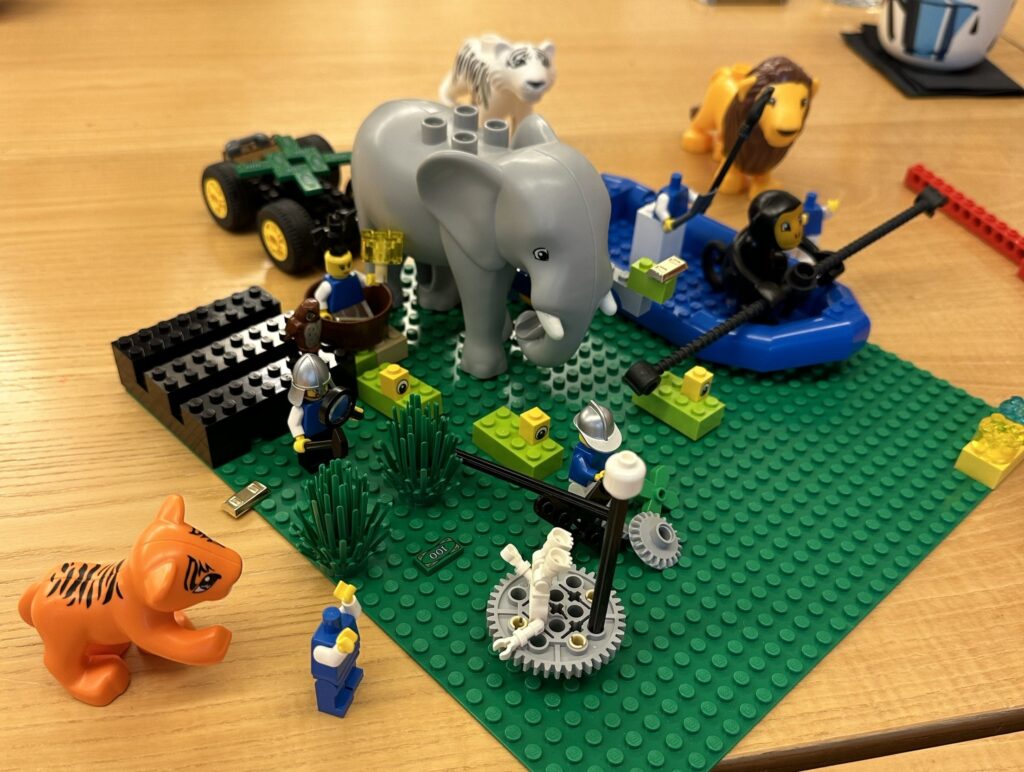
When Project Management Succeeds, the Team Thrives – Lessons Learned Through Lego Play
“German audiences value thoroughness and authenticity”, says Markus Engel of Communication Consultants
Insights from a Week Immersed in Stuttgart’s PR World

Netprofile’s success at the ICCO Global Awards continues – reaches the finals of the prestigious international communications competition
5 key learnings from the Nordic Business Forum for communications professionals

In a cyber crisis, you quickly run out of time and money – Here’s how to boost your resilience

So, what’s up in tech comms? And what does Esko have to do with it?

Netprofile dashes to the finals of the Finnish Comms Awards 2024 in five categories
Finding clarity when your strategic horizon is blurred
Nitor appoints Pasi Niemi as Vice President, R&D
I think, therefore I am a thought leader? – AI raises the bar, and only a few will clear it

Netprofile Industry Report: AI has a huge impact in tech PR and marketing – action required now

Netprofile Industry Report: AI Has a Huge Impact on Tech PR and Marketing – Action Required Now
Nitor has appointed Santtu Vuori as the Managing Director in Sweden

The quantum threat is rising – why should every company take note?

The answer is why – creating a successful podcast often boils down to answering one simple question
Heini Dahlström of SOK receives Agile Influencer of 2023 Award

Netprofile picks four Sabre EMEA awards finalist spots – green transition propels success

Netprofile Joins GlobalCom – Now Offers PR and Marketing Services in 100+ Markets

Dollars and data: How much is it for a social media lead?

Triple triumph – Netprofile and clients propel to finalist spots at ICCO Global Awards 2023
Wow! Finland is full of awesome communication!

Geopolitical tensions and the ethics of AI met in Warsaw

Netprofile reaches Finnish Comms Awards 2023 finals with four client projects

Native advertising, yuck!

Jukka Holm: Work Must Never Stop – Ever!
Your digital footprint after death – What happens online?
Speeding up sustainability – we set science-based targets for our climate work