Goodness me, what happened to sustainability? All the rage a few years ago, it now seems as if the topic has been buried under an avalanche of competing urgencies: geopolitics, economic turmoil, artificial intelligence, and job market upheaval.
Strategically, then, is sustainability passé as a tenet of trust, reputation, and business success? Short answer: no. A slightly longer argument follows.
I recently had the opportunity to explore the topic with the good people at Third Rock, the sustainability consultants. Full disclosure: many years ago, I was among the partners setting up the business that eventually evolved into what they are now; currently, neither Netprofile nor I have any stake in their operations, nor they in ours.
Here is my perspective.
Any enterprise seeking short-term sales and longer-term growth depends on stakeholder endorsement: customers willing to engage, politicians prepared to accept, media enthusiastic to admire. An intelligent organisation, therefore, focuses its communications on topics that reinforce its reputation as a force for the benefit of those who matter most to it.
If we are to believe the global scientific community (a reasonable idea!), we humans are literally toasting the planet, depleting its resources, eliminating fellow species, and rendering the air progressively less breathable. This is a trajectory people generally find unappealing.
If your organisation is seen as an active contributor to that trajectory, many people may simply choose not to do business with you. If, on the other hand, your company successfully profiles itself as a force for good, they are rather more likely to do so.
Be real, for real
Hence, with long-term interests in mind, your strategic sustainability communications should broadcast (consistently and with evidence) your contribution to a better future.
There’s the rub, of course. Sustainability practitioners recognise the holy trinity of people, planet, and profit, the last representing an organisation’s broader economic contribution to society. Right now, profit is doing most of the talking.
Market instability driven by extreme polarisation, geopolitical fracture, and the disruptive advance of artificial intelligence has put organisations into something resembling survival mode, with a narrowed field of vision. Long-term sustainability considerations can feel like a secondary concern when the quarterly numbers are alarming.
Collectively, we are charging ahead and ignoring a wall on the path. Or what MIT scientists, some fifty years ago, called the limits to growth. The concept repays attention if you have not revisited it recently.
AI only enhances radical transparency
The scrutiny will return, and when it does, it will be sharper than before. The current global data infrastructure creates what might be called a permanent record of corporate conduct.
The implication: Whatever organisations do today is being logged in the planetary information ecosystem – and it stays there.
I would not be surprised if future decades regarded this period with the rigour of an ethical truth commission and sought accountability accordingly.
If you remain unconvinced, consider Milton Friedman, once denounced as the torchbearer of uninhibited capitalist greed. His 1970 New York Times essay is routinely cited for this passage:
“In a free‐enterprise, private‐property system, a corporate executive is an employee of the owners of the business. He has direct responsibility to his employers. That responsibility is to conduct the business in accordance with their desires, which generally will be to make as much money as possible…”
What is almost never quoted is the sentence that immediately follows:
“…while conforming to the basic rules of the society, both those embodied in law and those embodied in ethical custom.”
Therein lies the key. We (that’s you and me) define the basic rules of society. We establish ethical custom, perceived justice, and eventually law. Friedman was not licensing destruction but subordinating profit to the norms that society itself determines.
The argument has been read selectively for half a century.
It’s all about architecture
So, what does this mean in practice? The organisations that will successfully tackle this period are those building what might be called a trust architecture. A solid, quantified body of evidence underpinning any sustainability claim they make now or in the future. They analyse and prioritise their stakeholders, exposing each audience to the subset of that evidence most relevant to them.
They engage openly with their shortcomings and their plans for improvement, rather than confining communications to good news. They invest in institutional memory building a coherent, searchable record of their conduct and commitments. Both because it is honest and because the AI-driven information landscape will surface it regardless.
And they resist short-termism. As Jim Collins argued in Built to Last, enduring enterprise success is most often driven by core ideology, values and a sense of purpose that extend beyond the quarterly result or the founder’s ego.
Be the clock builder, not the time teller, is his message.
One final note, in the spirit of precision. When people speak of saving the planet, they are not, strictly speaking, describing the problem correctly.
The planet is going nowhere. What is at stake is the specific way of life currently enjoyed by the (more affluent portions of) humanity. Bill Bryson‘s A Short History of Nearly Everything makes the point vividly. On the timescale of our planet, let alone the universe, humanity is a very recent, rather brief, and probably passing phenomenon.
The future is not bleak. We are, as has been observed, the first human generation with the technical capacity to address problems we created. The advances in clean energy, advanced computing, and science accumulating around us are significant.
The question is whether organisations and the people leading them choose to seize them as an opportunity. I think they (that’s we!) should.
We aspire to take the lead in responsible business practices within the marketing communications sector. Learn more about our sustainability programme.
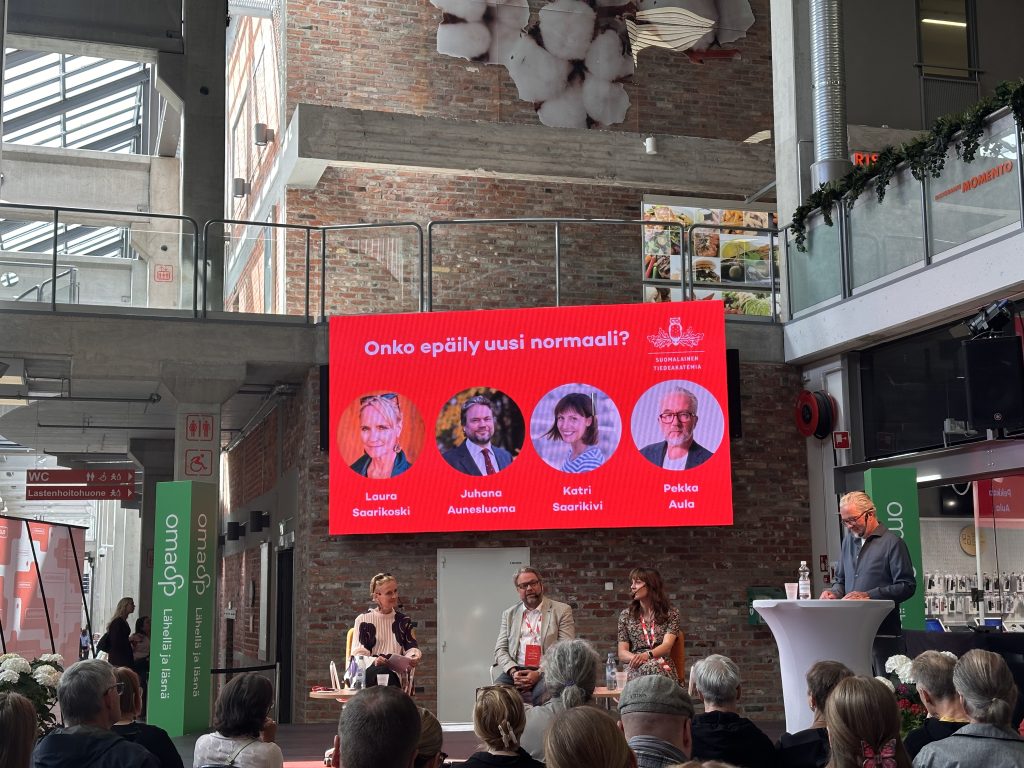
What’s happening to trust — Is AI destroying civilization?

The most meaningful conversations at SuomiAreena take place off stage

What the YouTube algorithm knows about science communication that researchers don’t

Payments down – cyber simulation, done?
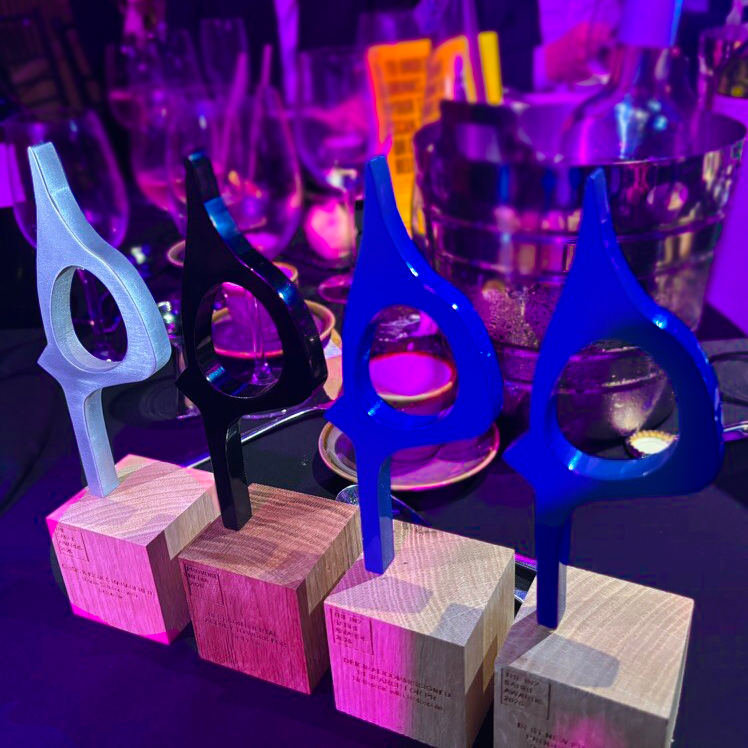
Netprofile named Best Agency to Work for in Continental Europe at EMEA SABRE Awards – values-driven culture and cyber crisis expertise deliver four wins

AI 2026: From an Efficiency Pipeline to an Infrastructure of Power
Exceptional SABRE success – What’s the awards program all about?
Netprofile report: B2B leaders reveal – communications and marketing professionals offered a more strategic role in business
Nitor grew profitability by 23 per cent and strengthened its core business in a challenging market

Netprofile shines at SABRE Awards EMEA 2026: finalist in six categories

In the maritime industry, rescue training is routine – why don’t companies bother to train for cybersecurity emergencies?

5+1 tips for effective expert videos

When the production line stops without warning – how industrial companies prepare for cyberattacks

Social acceptance siphons investment decisions in the electricity market